

making it work #9
the design tool rabbit hole


making it work is a bi-weekly series where I document AI tool experiments in real time and note what’s worth using. Subscribe if you want this in your inbox every week. Or comment and tell me what you’re building below!
Hi! I disappeared for a hot minute. Some of it was summer. Reading outside, taking the kind of break from writing weekly that you take from a first draft you need distance from.
I also did something big. I got engaged. Yeeess. I also went to a couple of weddings, started a new job, and somehow ended up in the Sunshine Coast, Brussels, Berlin, and London in the span of a few weeks. Ferry, bus, plane… I’ve taken every mode of transportation available to a person right now. If I go quiet again, this is probably why.
I’ve also been deep in design and motion design lately, taking a course by @attn.design and going to film school (VFS). Naturally, I experimented with some tools, so I wanted to write up what’s been worth my time.
Napkin AI vs. Lovart, for infographics
I’ve wanted to make infographics for this Substack for a while and never found anything that felt right. Napkin AI is fine; the output is similar to Gamma. I don’t think one is meaningfully better than the other.
However, I haven’t spent real time in Napkin’s brand studio yet, so that could change my mind. I know Gamma is always changing so quickly too.
Lovart lets you test the same output across a stack of models… nano banana, seedance, and others, without switching tools. My first pass had too little negative space; the second version fixed that, but I was unsure about the pink.
Lovart also lets you preview merch mockups from the same asset, which beats doing it manually in Photoshop (which I just learned how to do manually, oops!).
I was at a design x AI event earlier this year where I first heard of Lovart and also learned that the platform can generate videos for product launches, demos, etc. I haven’t tried it out myself because I ran out of credits, but I’ll come back to this.
Canva is doing the most with AI, and I mean that as a compliment
I think Canva is one of the best-positioned companies in how it’s adopted AI. It’s not just saying it’s an AI product without properly integrating it.
Everything that I’ve been learning in design and following hi.boly (I freaking love stop motion!) has changed how I use Canva day to day. The scrapbook effect is in heavy rotation for me now, along with the texture tool and the animate feature.
AI for video hasn’t arrived yet
Is this a hot take or the truth? Disclaimer either way: I don’t think AI video generation is there yet. And I’m not sure if it’ll ever fully get there, because film is hard to replicate and every AI-generated clip I’ve seen so far still reads as AI-generated to me.
That’s part of why I went to film school and a design bootcamp. I wanted to understand the craft, not just prompt around it. One exercise at film school was making Spotify reels for songs, 10-to-15-second loops, and I used yesand.ai to generate the source images before pulling everything into Canva to finish.
On the editing side, I finally tried Cardboard AI. I mentioned wanting to test it in a previous post.
While I like the name, I didn’t like the tool as much as I thought I would. It’s useful if you already have all your clips shot and just need help with the tedious part, such as overlay, stitching, the stuff that isn’t creative. Cardboard is “CapCut with AI”.
However, generating something from nothing is where this tool stopped working for me.
Looking for magic
All in all, I found Lovart and Canva the most interesting this week. If you’re building anything visual for a brand right now, these are good jumping points, but I’m curious to hear what actual creative/UX/brand designers, marketers, strategists, and directors have to say. Please drop a reco below!
I’d selfishly love to hear from Ileana (UX+AI), Design Buddies Community, Linda, Maria Izvestkina, Kira Klaas, Eimear, Felix Lee!!
Next up on my list to try and the first three coincidentally start with ‘r’:
Runway (Creative)
Riverflow (Brand)
Realize (Performance marketing)
Sauce (AEO)
Attn.design (Creative)
Until next time!!
am i... a marketer? is a newsletter about the weird experience of working in marketing right now. It’s where I share what I’m learning, unlearning, and experimenting in marketing and beyond, for marketers carrying unreasonable expectations. If this resonated, share it with someone who’s in the thick of it.

nicole
About the author:
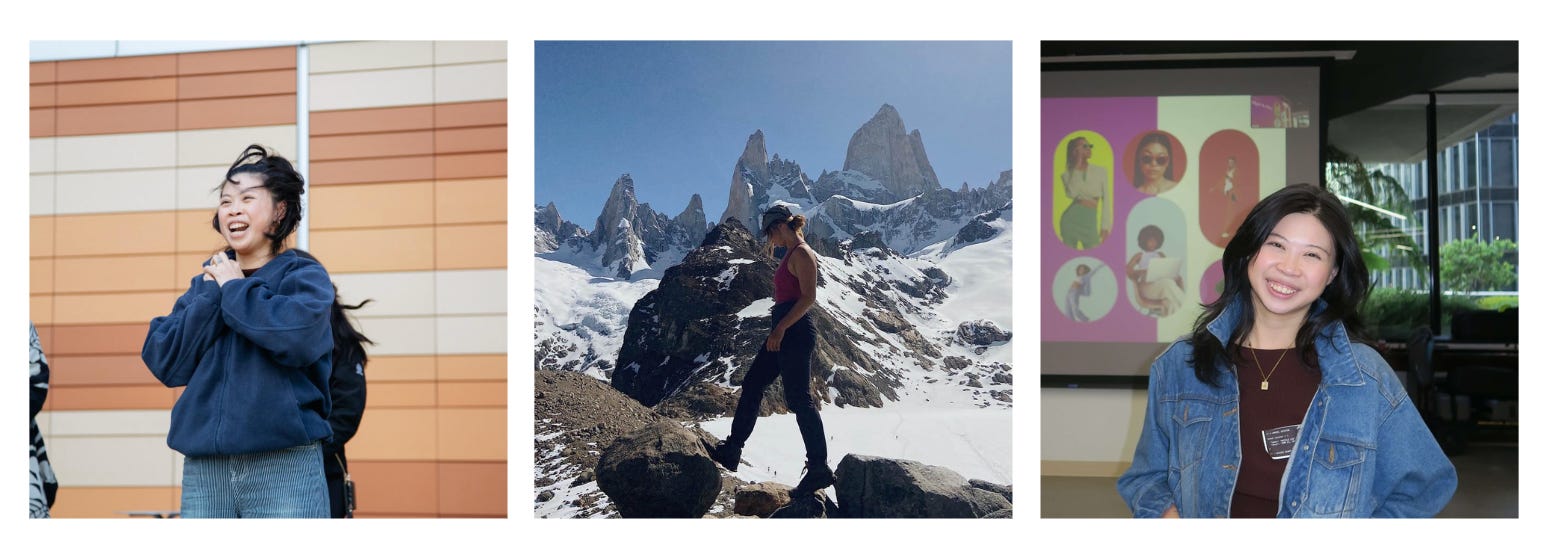
Hey, I’m Nini. I’m a head of marketing who’s spent about a decade in content, growth, demand gen, and product marketing, plus a lot of “figure it out.” I’ve worked at global companies, bootstrapped ones, some agency work after being in-house my whole career, and back to series A-B startups.
I’ve lived in 10 cities, so third-culture kid, I know. When I’m not writing, I’m outside hiking, skiing, making pasta from scratch, or creating a new playlist!
Want to go deeper? Here’s how I can help:
☎️ If you’re an early- to mid-career marketer, book a 1:1 coaching call, and we’ll dig into your marketing career or strategy together
📞 If you’re a founder or solo marketer, book a 1:1 consulting call, and we’ll look at how we can build your 0-1 marketing motion together
Follow me on LinkedIn, X, Instagram!
have you checked out higgsfield ai? their product experience is super cluttered right now (and I don't think they're yet heroing the best examples of what these models are capable of—total brand opportunity right there) but they have the most breadth of any platform atm.
i've been having fun using adobe firefly for image generation—you can easily switch between models, so it's fun for iterating on mockups or exploring directions (like for this fake ice cream brand I'm making lol—I like to see what all the weird flavors could look like), though I still have a very high bar for what I'd consider good enough to be a final asset that the audience sees. the question of origin (AI vs. human-created) obviously still carries a lot of weight as far as how we interpret assets or art (or what we consider art). there's a difference between commercial art and fine art, and AI is squarely in the commercial art camp for now—and even then, consumers pick up on what you're putting down, the effort you're putting in as a reflection of how you value them, so that needs to be considered.